PawsRoam
B2B2C Pet Ecosystem — 0-1 Execution
A B2B2C ecosystem solving fragmented information and emergency care for the pet sector (50T JPY Global TAM). Built with institutional discipline: market-validated strategy, automated service commissions, and a scalable Firebase + k8s architecture. Shipped December 2025: From a Computex VC consultation to an active marketplace with verifiable user engagement.
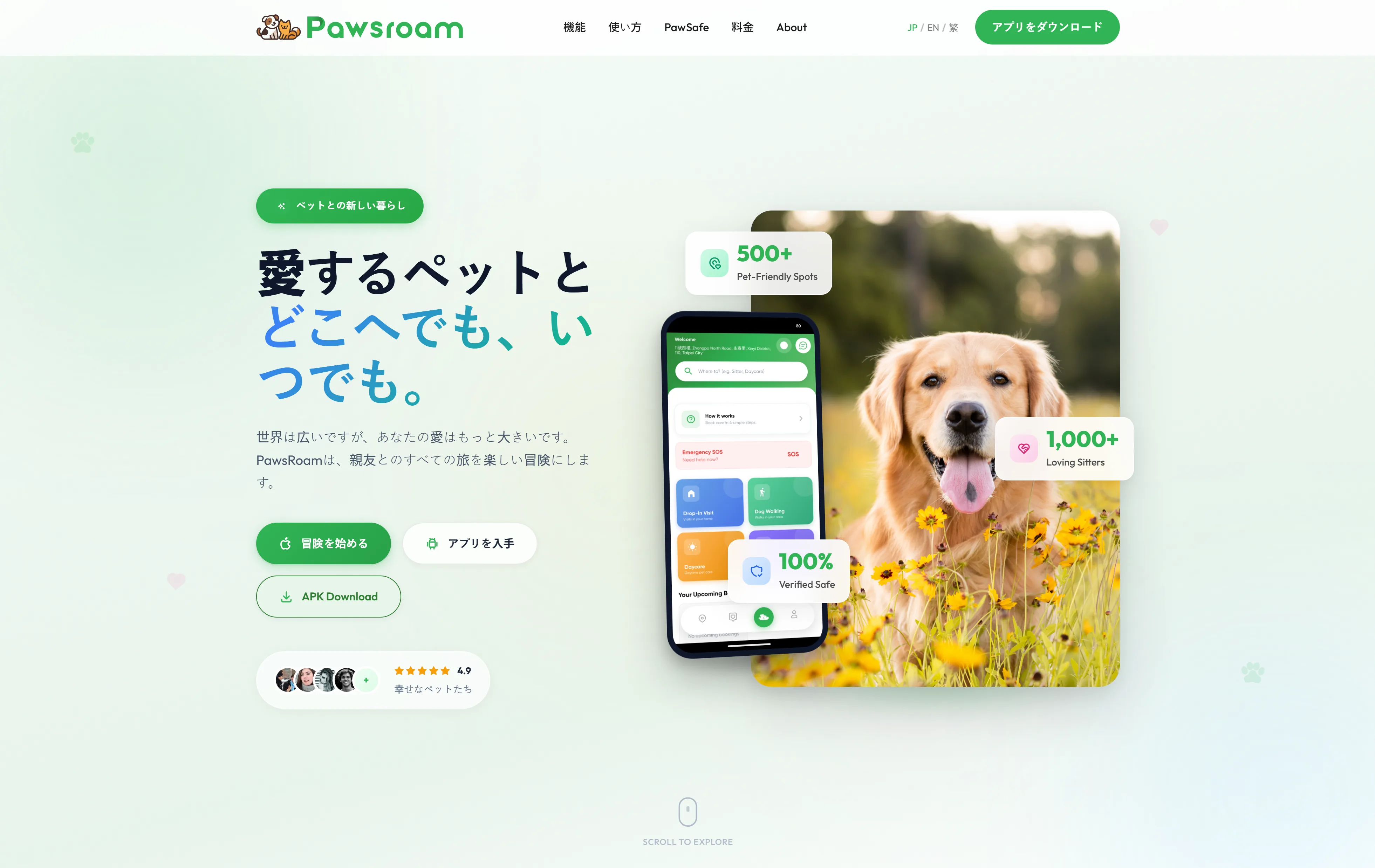
Executive Summary
PawsRoam is a pet services platform I built from scratch — from 7 months of Tokyo field research to deployed MVP. The problem: pet owners in Japan can't easily tell which facilities are trustworthy. We solve that with verified facility profiles (weight limits, leash rules, amenities) rated through our PawStar system, plus an emergency sitter network for when things go wrong.
Hyper-detailed facility policies (weight limits, leash requirements, amenities) verified by the PawStar rating system.
An on-demand emergency network connecting users to certified sitters and pet-friendly crisis accommodation.
Phased expansion — Fukuoka pilot validates core UX before provider onboarding and national infrastructure rollout.
The Origin Story
It started at Computex. I was there doing what I always do at conferences — moving through the floor, listening, finding the people who are thinking about what comes next. That's where I met Kenta Uehira, a VC from Japan. We talked about pet culture, about travel, about the fragmented experience of being a pet owner in a city that wasn't built for your dog or your cat. He listened. Then he said something that stopped me cold:
「福岡で必ず火がつく」
"This will definitely catch fire in Fukuoka."
That sentence became the ignition spark. Not because a VC said it — I wasn't chasing validation. It was because he was right. And I knew it. The problem was real. The market was real. The timing was right.
I started learning Japanese. Not with a class, not with an app — with intention. I wanted to walk into rooms in Tokyo and earn that conversation, not rely on someone else to translate it. I traveled back. I carried business cards. I walked into pet cafes, veterinary clinics, sitter communities. I sat with pet owners and asked them what frustrated them, what scared them, what they wished existed. I was doing the research because I am the user. The problem didn't happen to a persona I invented — it happened to me, and to my friends.
On May 27, 2025, I opened Figma and started building. React, Firebase, Kubernetes. Seven months of heads-down focus. On December 22, 2025, the MVP went live on Firebase. And then — within 7 days — 200MB of Firebase Hosting data transfer (asset delivery, not a user count).
After 7 months of heads-down building, this was the message I sent to Kenta.
上平さん、
お世話になっております。Ed Chenです。
以前、PawsRoamについて「福岡で必ず火がつく」と
おっしゃっていただいたこと、とても励みになっております。
実は、過去7ヶ月間、製品開発に集中してきました。
現在、アプリはほぼ完成しており、
いよいよ市場への展開を開始する段階に来ました。
上平さんのご意見を伺いたく、
お時間をいただけないでしょうか?
具体的には:
1. 福岡での最適な市場参入戦略
2. 初期に接触すべきペット関連のコミュニティやお店
3. もし可能であれば、ご紹介いただける方々
オンラインでも対面でも、ご都合の良い形で
30分ほどお話しできれば幸いです。
何卒よろしくお願いいたします。
Ed Chen
PawsRoam Founder
Sent after 7 months of building. Not a pitch. An update to someone who believed in this before the product existed.
2. The Opportunity — Solving a 50T JPY Market Gap
"The pet 'familyization' trend is driving a global economy of 50 trillion JPY. In Japan, 15M+ pets outnumber children under 15, yet the infrastructure for pet-friendly living remains fragmented and unreliable."
Global Market
¥50T+
Total addressable market (TAM) driven by the humanization of companion animals (Yano Research Institute, 2023).
Japan Market
¥1.7T+
Japanese pet industry size — food, healthcare, services, accommodation (Japan Pet Products Association, 2024). Growing at ~4% CAGR driven by premiumisation and aging pet population.
Pet-to-Child Ratio
15M vs 14M
Pets now outnumber children under 15 in Japan, creating a massive demand for pet-centric urban infrastructure.
Existing solutions are surface-level and ad-driven, lacking the depth and trust required by modern, tech-savvy pet parents. Four recurring problems surfaced across field interviews and observational research during Tokyo visits spanning Shimokitazawa, Nakameguro, Shibuya, and Yoyogi:
🗺️ Information Chaos
Google Maps labels venues "pet-friendly" with no policy detail — weight limits, leash requirements, breed restrictions, indoor vs. outdoor-only rules. Every owner I spoke with had experienced an on-the-spot rejection after arriving somewhere the internet said was welcoming. One Shibuya cafe I visited had a "no dogs under 5kg" rule printed on the door — nowhere online. The gap between declared and actual access is the most consistent friction in the entire category.
🚨 Emergency Void
When an owner faces an unexpected change — a venue refusal mid-journey, a sudden work obligation, a medical emergency — there is no on-demand network for same-day trusted pet care. Existing sitter platforms (like PetBacker) require advance booking of 24–48 hours. The sitter community in Yoyogi confirmed this directly: crisis requests came in constantly, but there was no structured way to broadcast availability or match urgently. The gap between "I need care now" and "I found safe care" can run 2–4 hours.
❌ Erosion of Trust
Search results for "pet-friendly Tokyo" are dominated by paid placement and affiliate content — venues pay to appear, regardless of actual policy. Multiple owners mentioned learning to distrust results entirely, reverting to word-of-mouth from local pet owner networks (LINE groups, neighborhood Facebook groups). Community-validated data was universally trusted over platform-published data. This is the design constraint that shaped PawsRoam's entire trust architecture: earned reputation cannot be purchased.
These problems repeated consistently across all interview contexts — urban dog owners, sitters, and venue staff described the same friction from different vantage points. That convergence, not volume, is what warranted building a solution.
Competitive Landscape: Why Existing Platforms Don't Solve This
Before committing to building, I mapped the existing solutions and specifically identified where each one fails the Tokyo urban pet owner.
| Platform | What It Does | Critical Gap |
|---|---|---|
| Google Maps | Venue discovery with "pet-friendly" tags | No policy depth. Tags are owner-submitted, rarely current, and do not capture breed/weight/leash restrictions. |
| Rover / Wag | Sitter booking (24–48h advance) | No emergency/same-day matching. No Japan localization. No venue discovery layer. Sitter trust model relies on platform reviews, not community validation. |
| PetBacker (JP) | Japan-localized sitter marketplace | Advance booking only. No venue discovery. Trust model is platform-certified (can be gamed with fake reviews). No emergency infrastructure. |
| LINE Groups / Facebook | Community-verified word-of-mouth | Most trusted by actual users — but closed, not searchable, non-scalable. Requires existing network membership. No emergency dispatch. |
PawsRoam's differentiation: the only platform combining venue discovery (with verified policy depth), community trust architecture (non-purchasable ratings), and emergency sitter dispatch in a single Japan-native product.
3. Product Design — On the Ground in Tokyo
Before writing a line of production code, I spent time in Tokyo across multiple visits — walking neighborhoods, entering pet cafes as a customer, speaking with veterinary clinic staff about intake friction, and sitting with dog owner communities in Yoyogi Park. The goal was directional validation: understanding whether the problem was real before committing 7 months to building a solution. What I found confirmed the market gap. What follows documents both what I observed and how it shaped the product architecture.
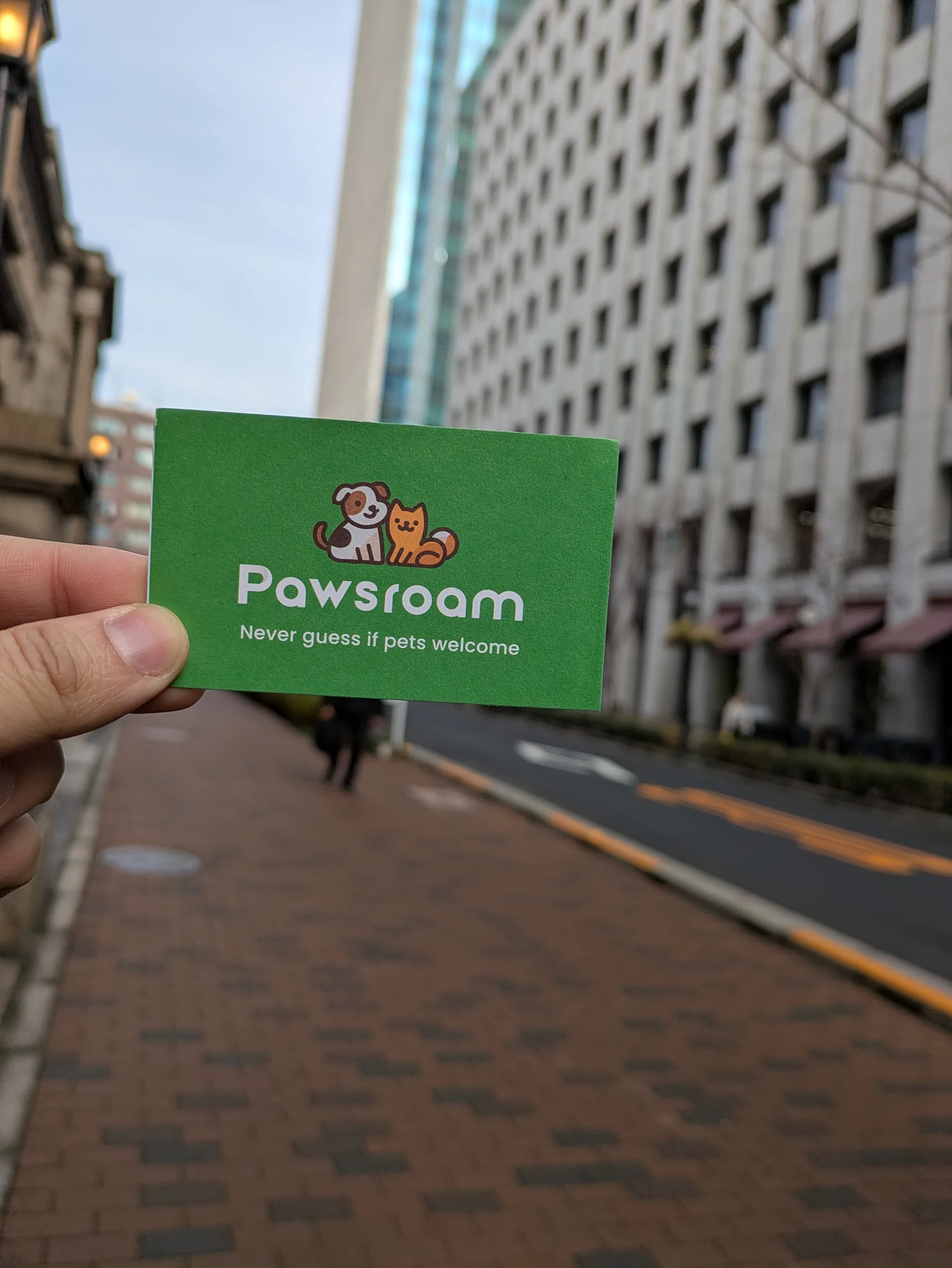
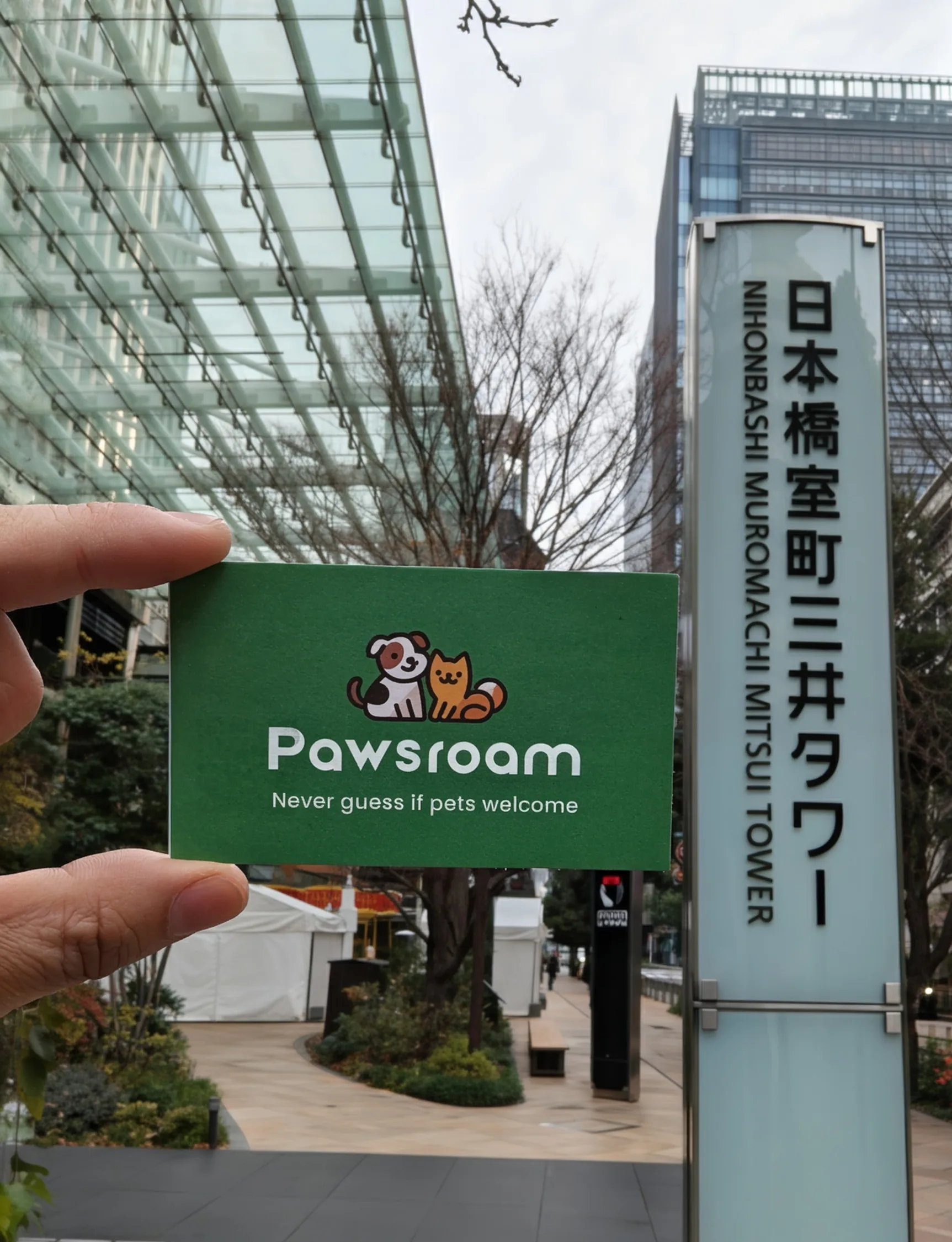
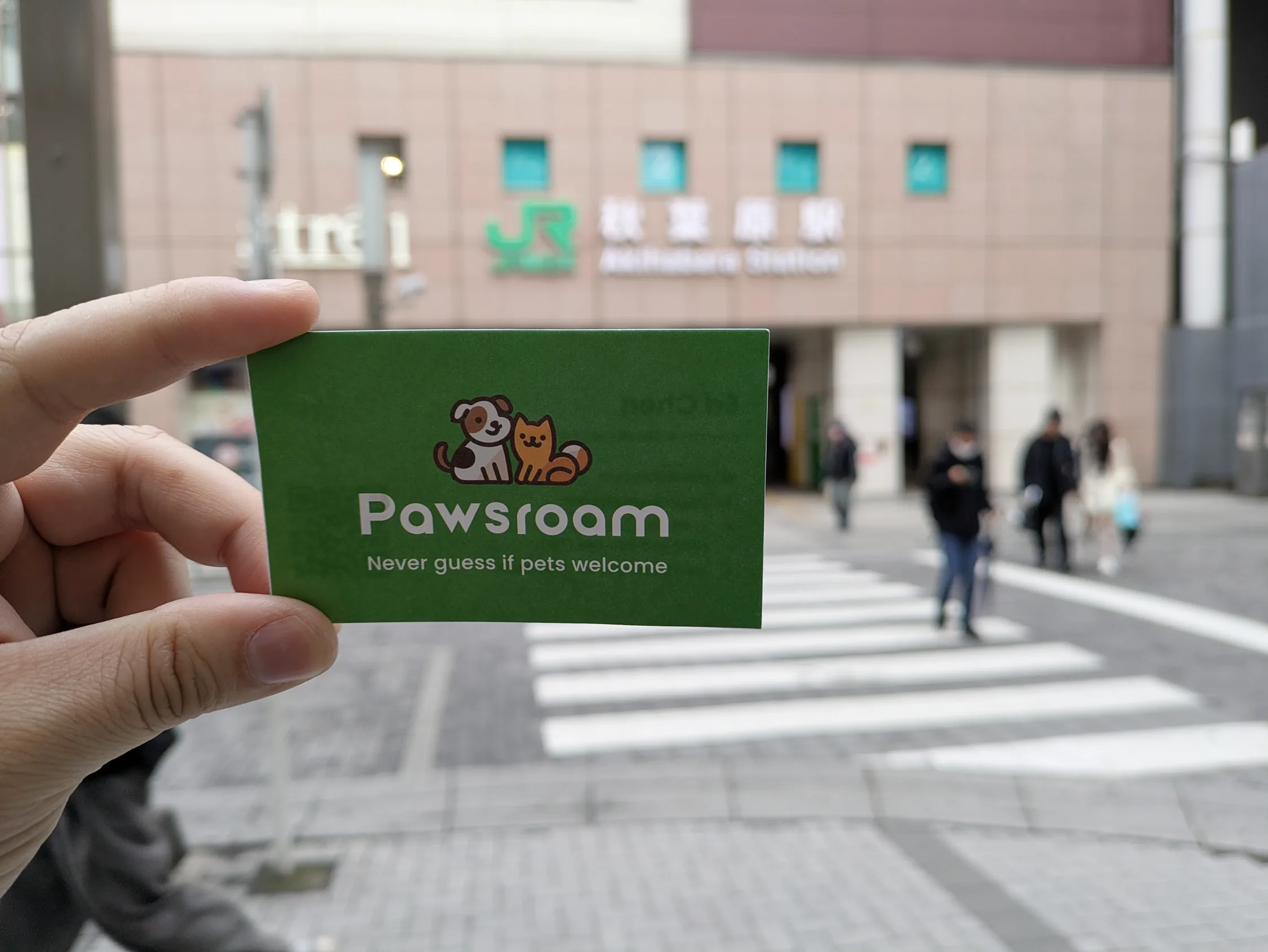
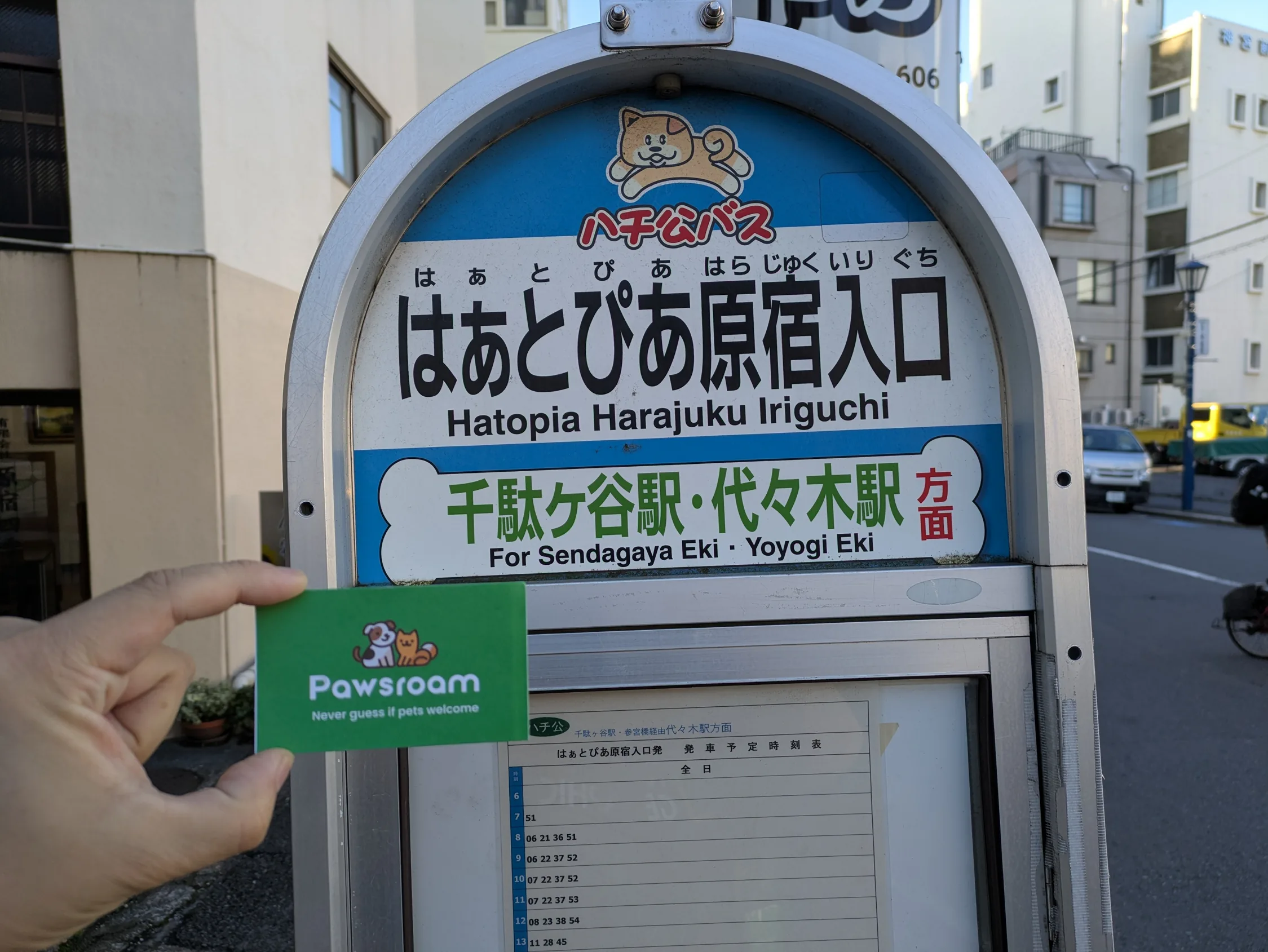
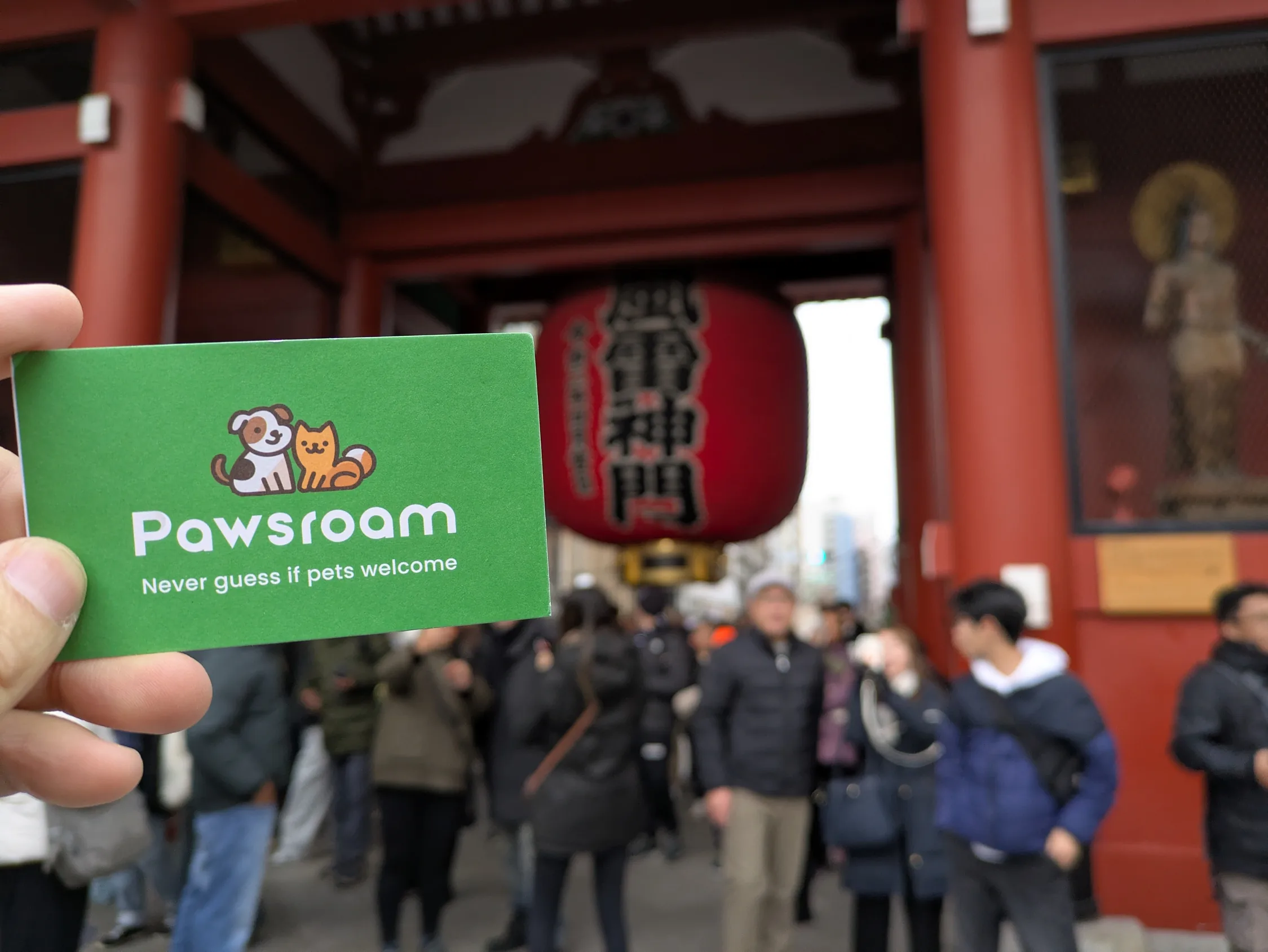
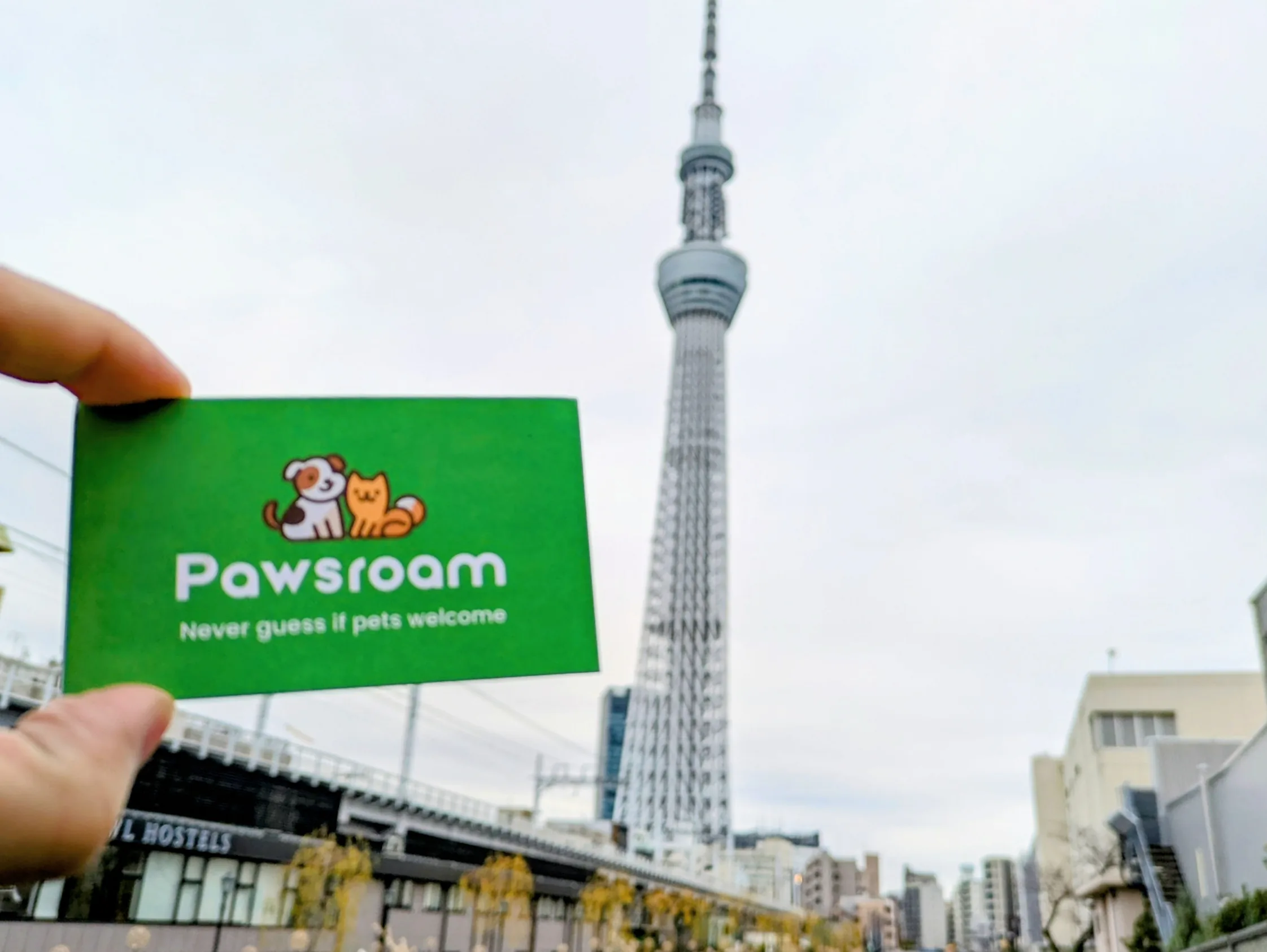
On-the-ground research: pet cafes, veterinary clinics, parks, sitter communities — Tokyo.

Akihabara Wasn't Just for Tech
The pet culture running through Tokyo's neighborhoods — from the quiet specialty shops of Akihabara to the open parks of Shibuya — became the foundation for PawsRoam's location data architecture. Every district has its own pet ecosystem. Understanding that wasn't possible from a spreadsheet.
4. Solution Architecture — The Product Engine
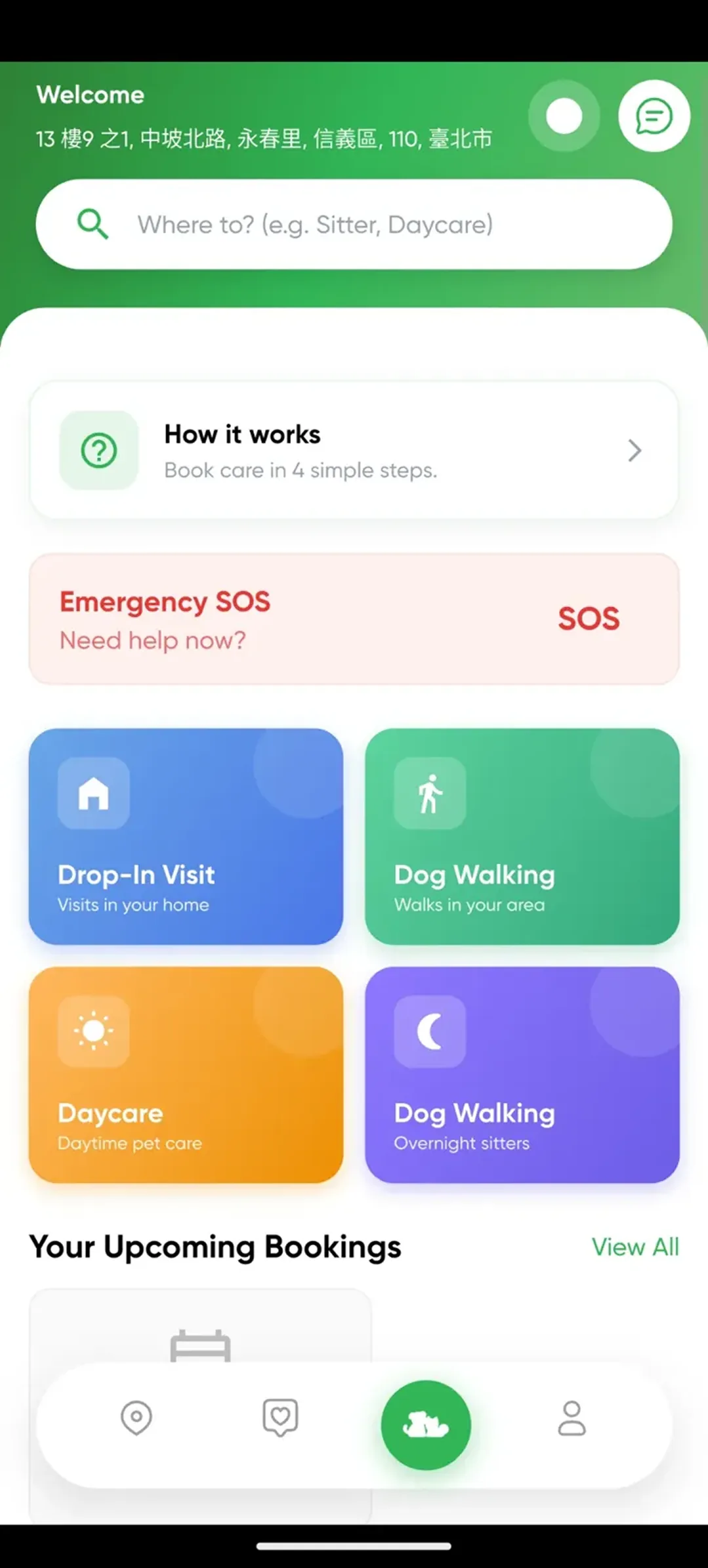
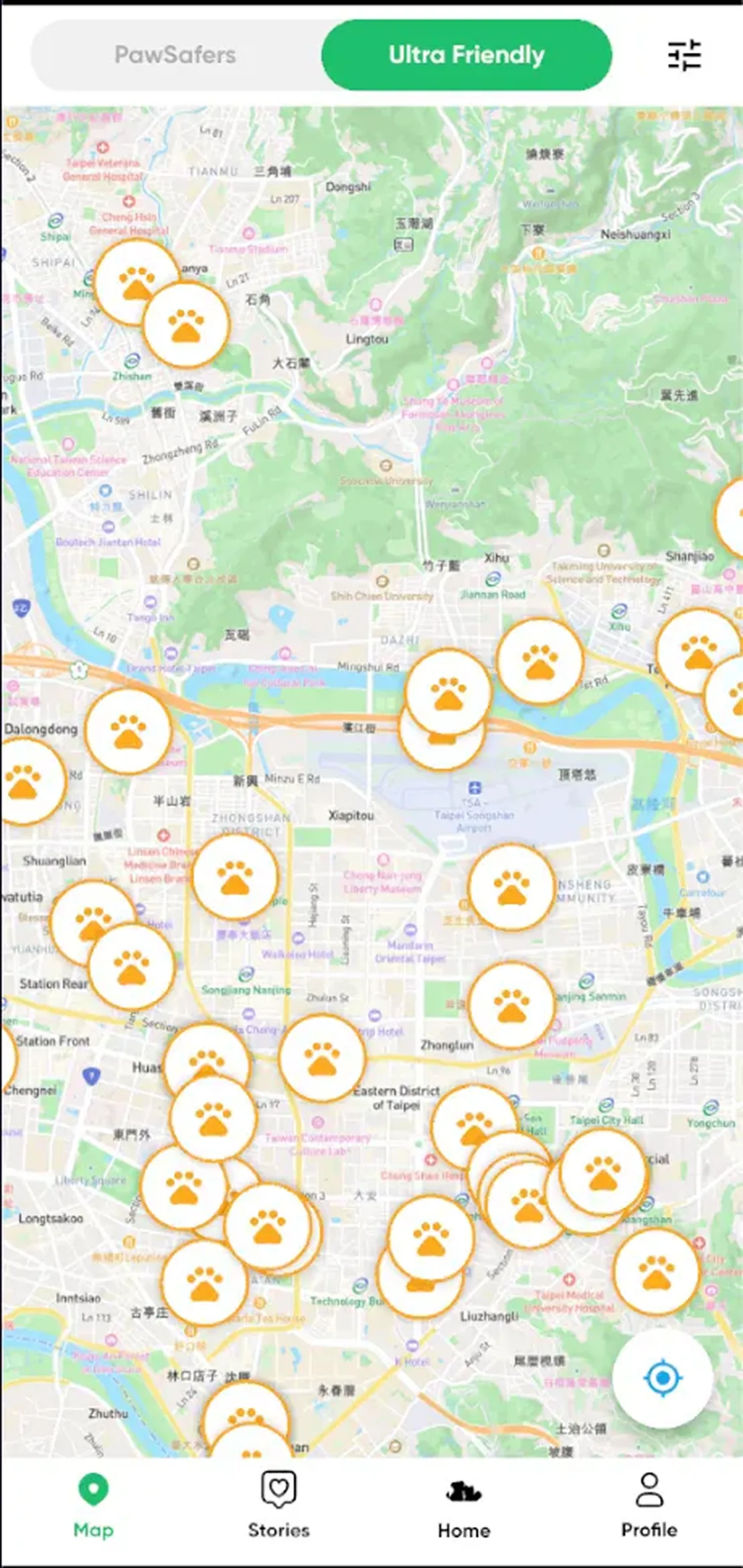
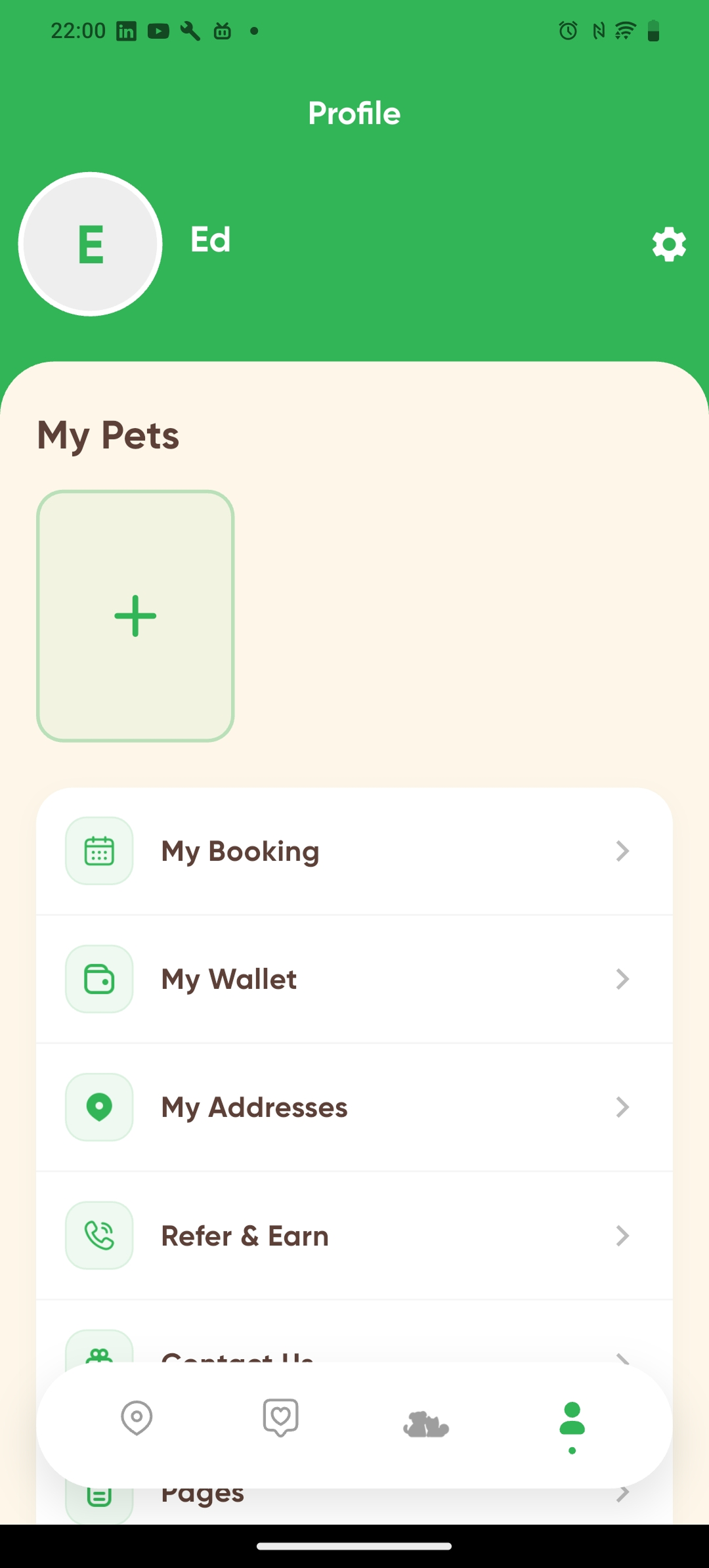
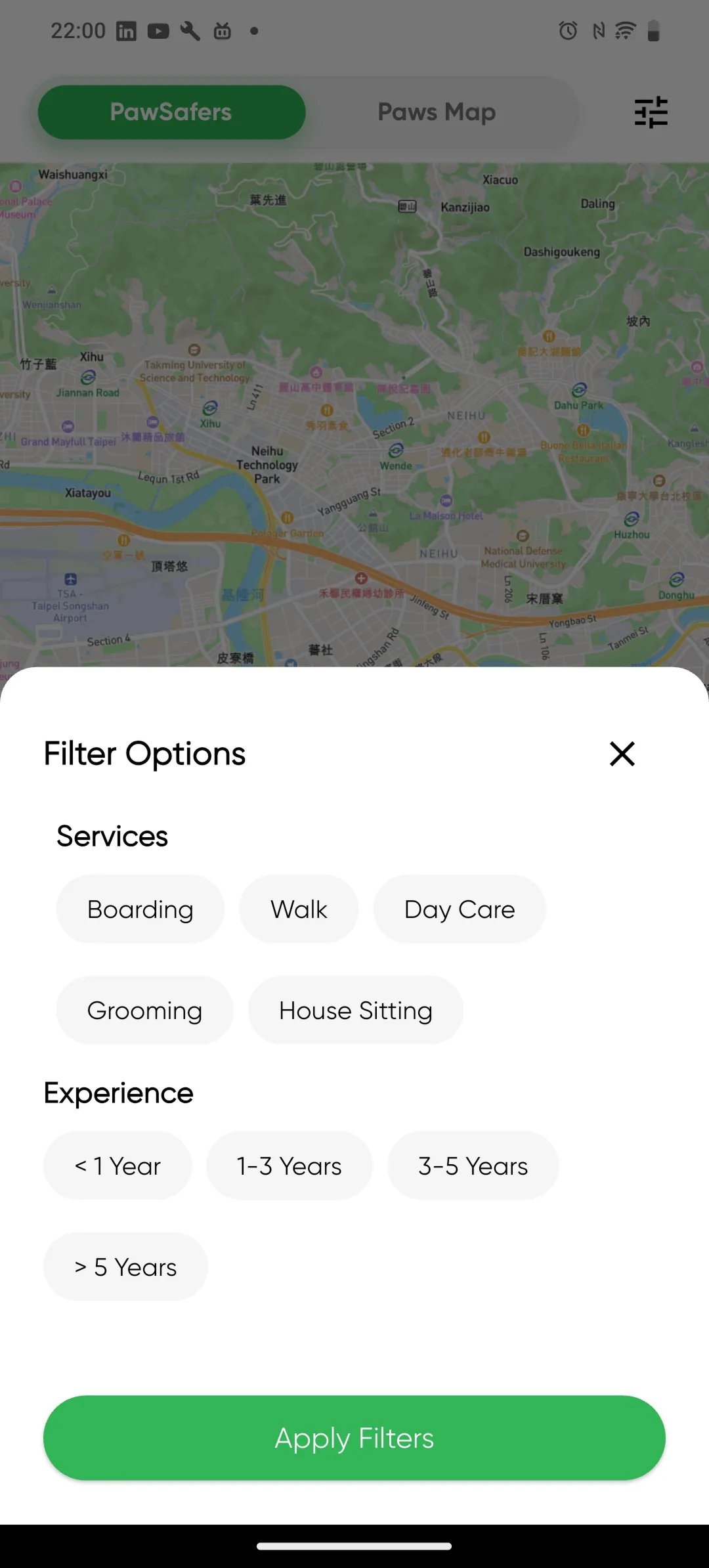
Architected for high-frequency urban utility, PawsRoam utilizes a Map-Centric Interface built on React Native for cross-platform stability (iOS/Android), integrated with the Google Maps API for real-time location services.
Three-Tier Dynamic Marker Logic
Initial user-recommended venues pending PawsRoam verification.
Verified through our proprietary trust system (1-3 PawStars).
Certified PawsSafer™ locations and emergency sitters.
Proprietary Data Layer: Multi-Dimensional Pet Profiles
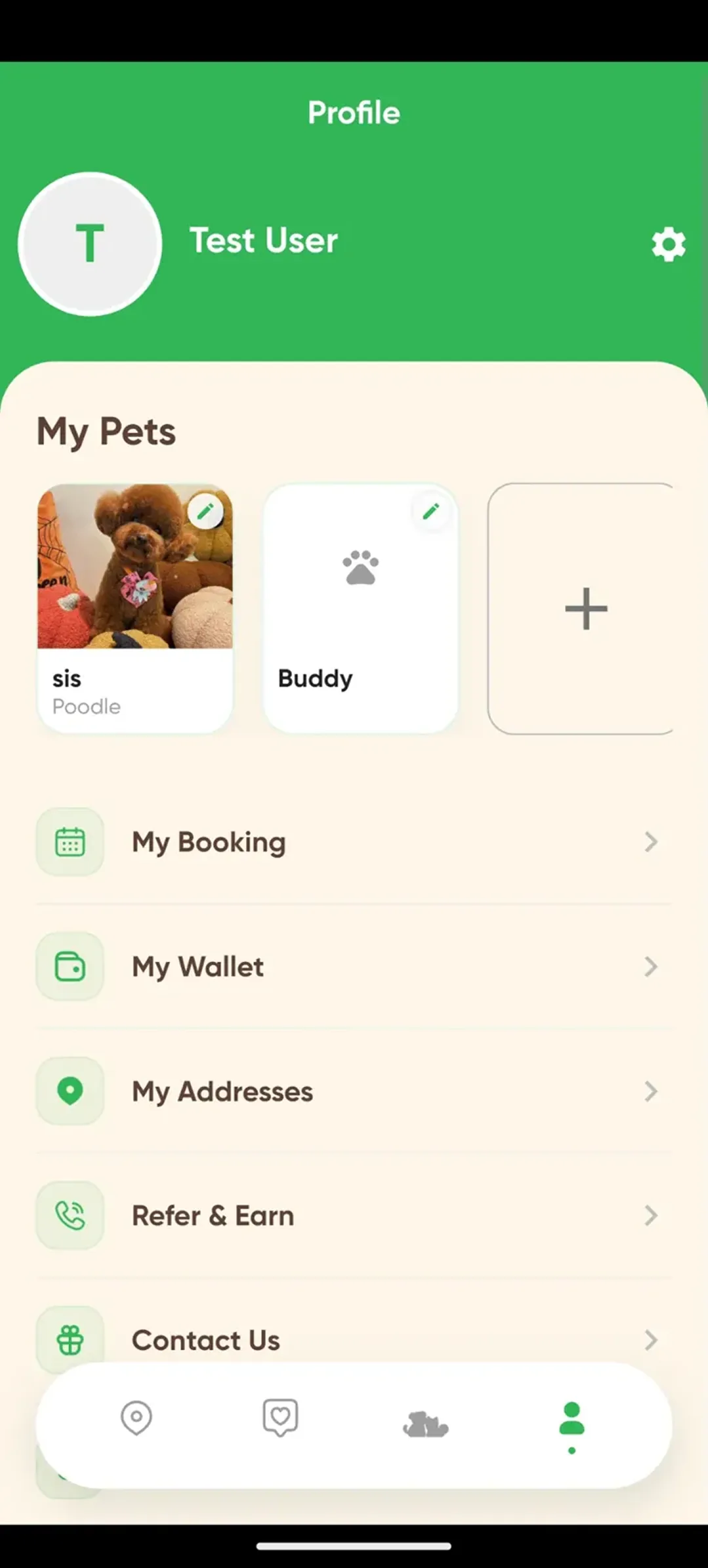
Our matching engine for PawsSafe™ relies on a high-fidelity data layer far beyond simple text fields. This structured data ensures medical accuracy and behavioral compatibility.
Vaccination history (with doc uploads), allergen tracking, and chronic medication schedules.
Sociability index (strangers/animals), anxiety triggers, and activity level profiling.
Specific dietary needs, therapy food brands, and post-surgery recovery monitoring.
To address the deep-seated trust and safety issues in the pet market, PawsRoam is built on three core innovation pillars:
PawStar™ Rating System
Trust Gold Standard
Non-purchasable, Michelin-style validation. Facilities earn PawStars (1-3) based on verified community nominations and strict adherence to pet-friendly criteria (amenities, staff training, policy consistency). This eliminates the "ad-driven" bias of traditional review sites.
Pillar 2: PawsSafe™ Network
Safety First Architecture
Emergency SOS & Care System.
• Daycare / Boarding
• Home-visit Sitting
• Dog Walking
• Emergency Accommodation
• Real-time Photo/Video Audit
Pillar 3: Ecosystem Sync
Community & Benefits
PawsConnect™ Hub: Q&A Forums and community support.
PawsCoupon™ Network: B2B merchant portal for verified in-app discounts. We bridge businesses with high-intent pet owners.
The PawsSafer™ 6-Tier Verification Protocol
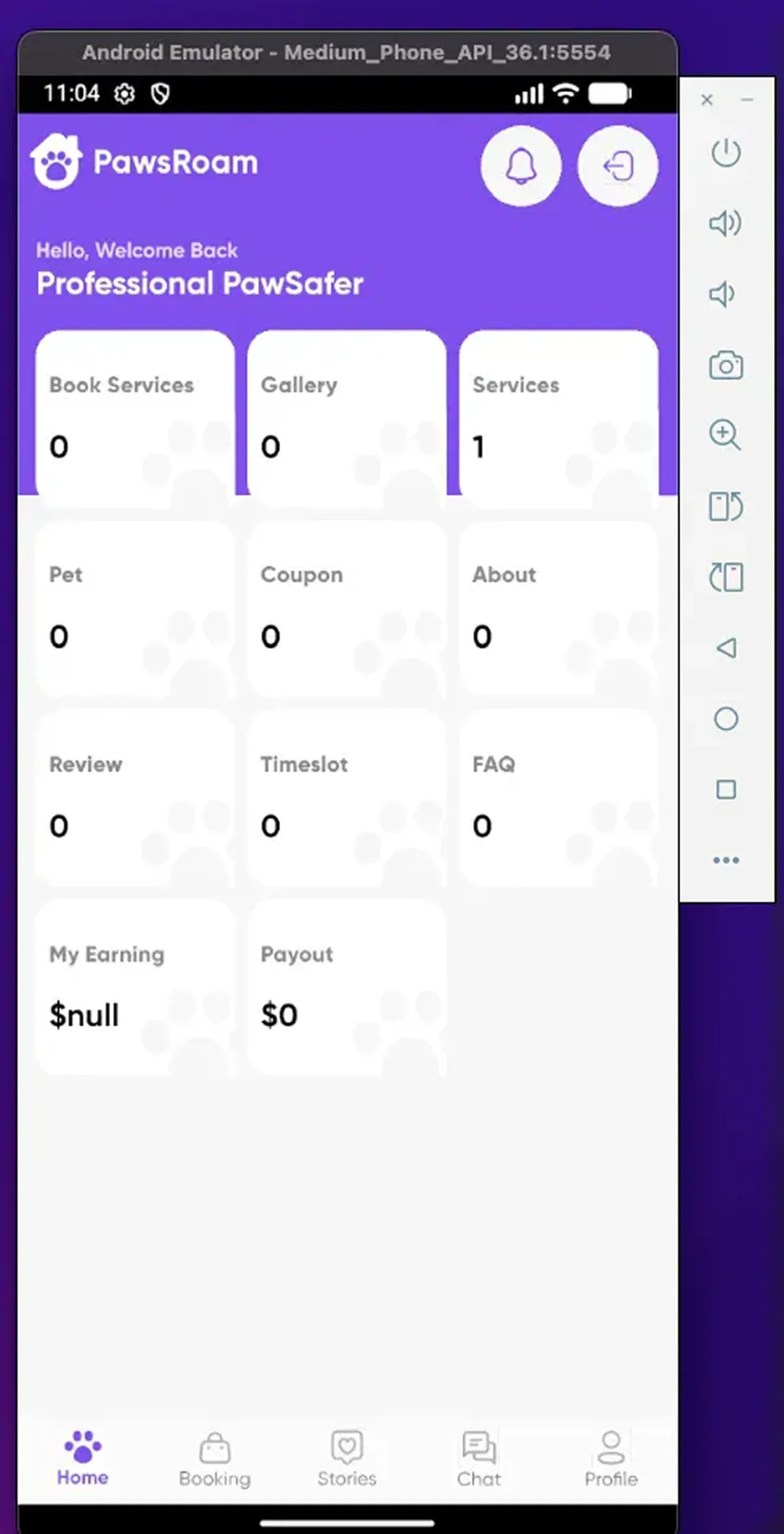
Our caregivers aren't just registered; they are institutional-grade vetted professionals. No "Gig-Economy" compromise.
ID Verification (AML/KYC Standard)
Full Background Check
Environment/Home Inspection
Mandatory Training Modules
C-Level Review/Interview
Certified Badge Issuance
5. Business Model — The Revenue Logic
PawsRoam's monetization strategy is designed for long-term scalability through a diversified B2B2C model, moving beyond simple subscription fees to capture value across the entire pet care value chain.
Service Commissions
- PawsSafe Network: 15-20% commission on emergency sitter bookings and temporary boarding.
- Premium Matching: Flat-fee for high-level specialized care matching.
B2B Affiliate & Insights
- PawsCoupon Placement: Monthly listing fees for high-visibility business promotions.
- Data-as-a-Service: Aggregated, anonymized consumer behavior data for pet brands and retailers.
B2C Premium Tier
- Priority SOS: Immediate bypass for emergency sitter matching.
- Exclusive Offers: Early access to PawStar-verified facility bookings.
Go-to-Market Phasing: Design Rationale
Rather than building for every user at launch, I designed PawsRoam's onboarding and feature architecture around a deliberate phasing strategy — each phase unlocking UI complexity only after the previous stage's trust signals were validated.
Design decision: Single city, map-only view. No B2B onboarding portal, no admin dashboard. Minimized surface area to validate core job-to-be-done: do pet owners use geo-based discovery under real conditions?
Design decision: Self-serve business portal added only after consumer-side trust signals confirmed demand. Designing the provider portal before consumer validation would have built the wrong product — a classic two-sided marketplace sequencing error.
Design decision: Multi-region admin tools and analytics dashboards designed for operations staff, not end users. Kept this out of MVP to avoid premature complexity — the same constraint-as-brief discipline applied at ACY Securities across multi-jurisdiction rollouts.
The phased architecture reflects a product design principle, not a financial forecast: design scope should expand with validated evidence, not projected optimism.
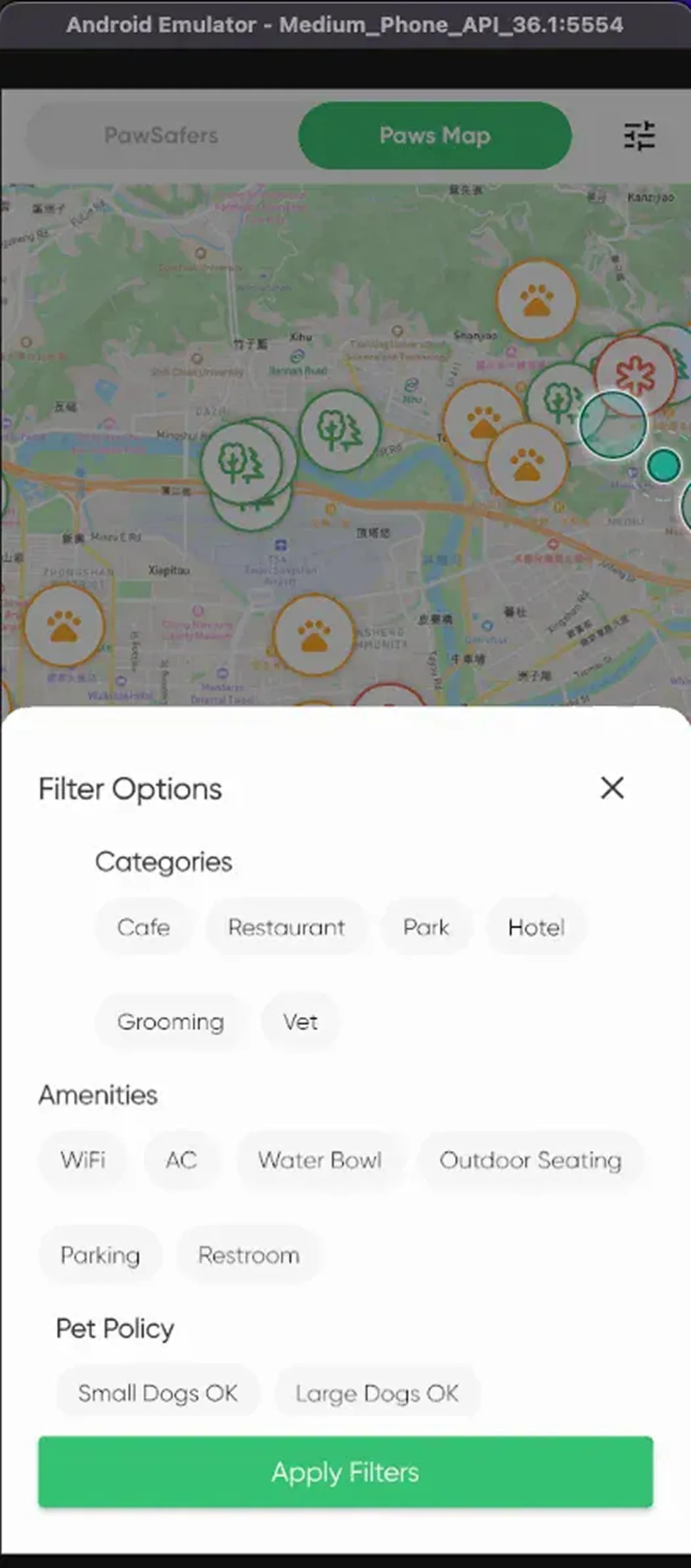
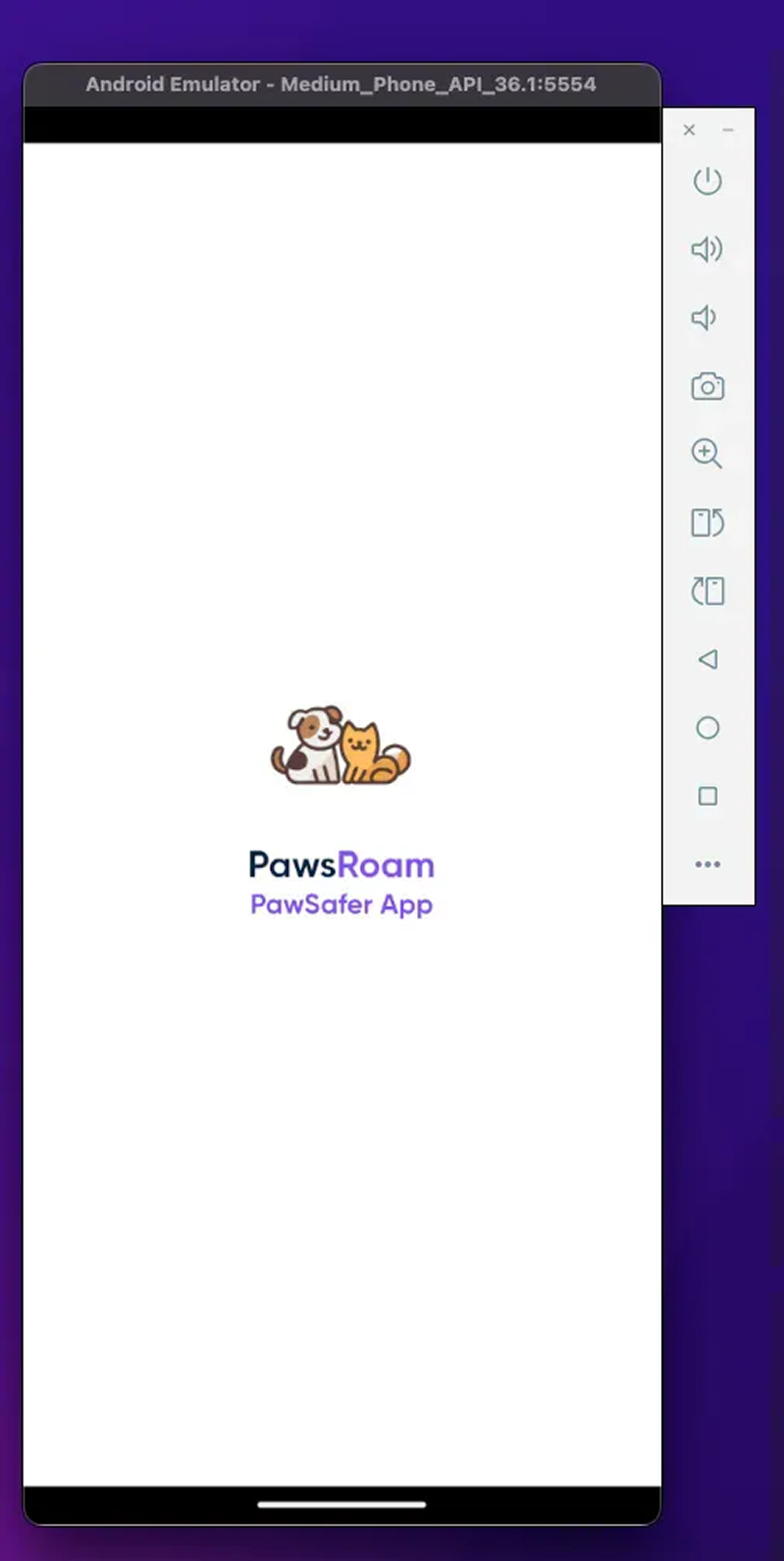
App Testing Sessions
6. Institutional Risk Management Matrix
A professional-grade project requires acknowledging structural risks and proactively building defensive moats. This matrix demonstrates the project's maturity in identifying and mitigating headwinds across eight strategic dimensions.
| Risk Category | Probability | Impact | Mitigation Strategy |
|---|---|---|---|
|
User Engagement
|
Medium | High | Hyper-local marketing, gamification, and referral programs. Positioning PawsSafe as an "Essential Safety Net" rather than a utility. |
|
Information Accuracy
|
Medium | High | Community reporting tools, mandatory photo/video validation for PawStar nominations, and AI-driven anomaly detection (v2). |
|
Provider Onboarding
|
Medium | Medium | Competitive commission rates, marketing support for providers, and strategic partnerships with veterinary clinics and grooming salons. |
|
Market Competition
|
Medium | Medium | Focus on the proprietary PawsSafe network as a defensive moat. Building network effects and "Moat" branding from Day 1. |
|
Monetization
|
Low-Med | High | Diversified revenue streams (Commissions, B2B Affiliate, Insights). Tiered rollout to prioritize user value before aggressive capture. |
|
Technical Scalability
|
Low | Medium | Lean Firebase MVP for initial agility. Strategic migration plan to Node.js/k8s microservices for post-seed expansion. |
|
Regulatory/Legal
|
Medium | Medium | Compliance with Japan's Animal Welfare Act and APPI. Comprehensive legal consulting for liability and insurance requirements (PawsSafe). |
|
Resource Constraints
|
High | Medium | Hyper-focus on MVP features. Outsource non-core operations. Deployment of advisory board for strategic oversight post-funding. |
|
Fundraising
|
Medium | High | Lean operations to hit key milestones. Compelling business case targeting the 50T JPY global pet market. |
Strategic Alignment: The Institutional Mindset
Why does a "Pet Ecosystem" matter for elite institutions like J.P. Morgan, Goldman Sachs, BlackRock, and Morgan Stanley? Because PawsRoam is not a "hobby project" — it is an exercise in transferable institutional rigor.
Applied Excellence (学以致用)
Trained by elite academic mentors in the discipline of high-level executive reporting (C-Suite PPTs/Investment Docs), I apply the same "Golden Standard" to 0-1 ventures. Knowledge is value-less unless it is systematically applied to solving real-world market gaps.
Resilience & Immediate Correction
True seniority is not avoiding failure, but finding problems and course-correcting instantly. PawsRoam is a sandbox for "Failing Fast, Fixing Faster" — an essential trait for Senior Product Designers in high-stakes financial environments.
Cross-Domain Logic Integrity
Whether designing a UHNW wealth management platform or a mass-market safety network, the underlying architecture (Risk Management, Data Compliance, Scalability) remains identical. My work reflects a commitment to institutional logic, regardless of the target audience.
"I don't just build products; I build architectures that look towards tomorrow, rather than stagnating in the current moment. PawsRoam is the evidence of that institutional discipline applied at scale."
7. Technical Architecture — Built to Ship
I made deliberate architectural choices to maximize speed-to-market without sacrificing scalability. Firebase Hosting on the Spark plan meant zero infrastructure cost during MVP validation. Kubernetes handles the backend service orchestration. React 18 powers the client. The stack is pragmatic — built to prove the product, not to impress engineers.
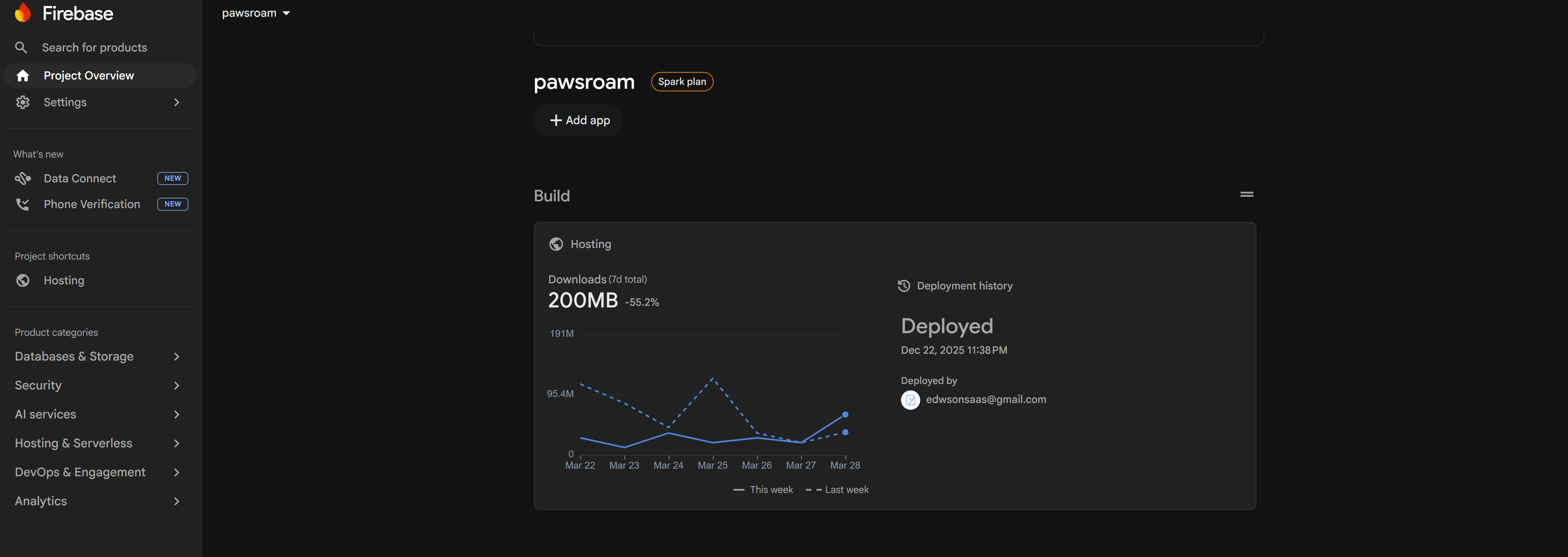
200MB
Firebase Hosting data transfer in 7 days
(Mar 22–28 — asset delivery bytes, not a user count. User count tracked via Auth metrics.)
Dec 22
Deployed to Firebase
2025
7 mo
Idea to MVP
May → Dec 2025
$0
Infrastructure cost
Spark plan
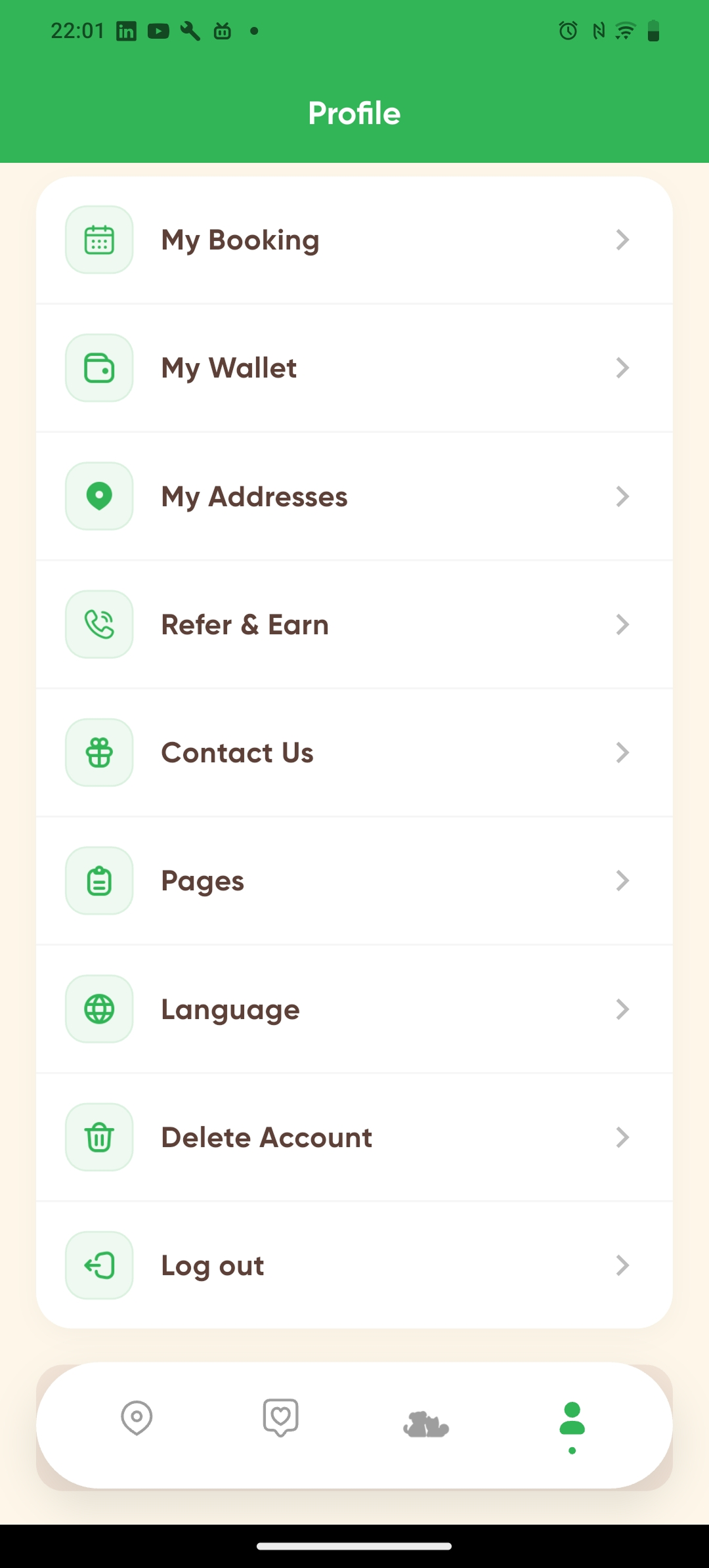
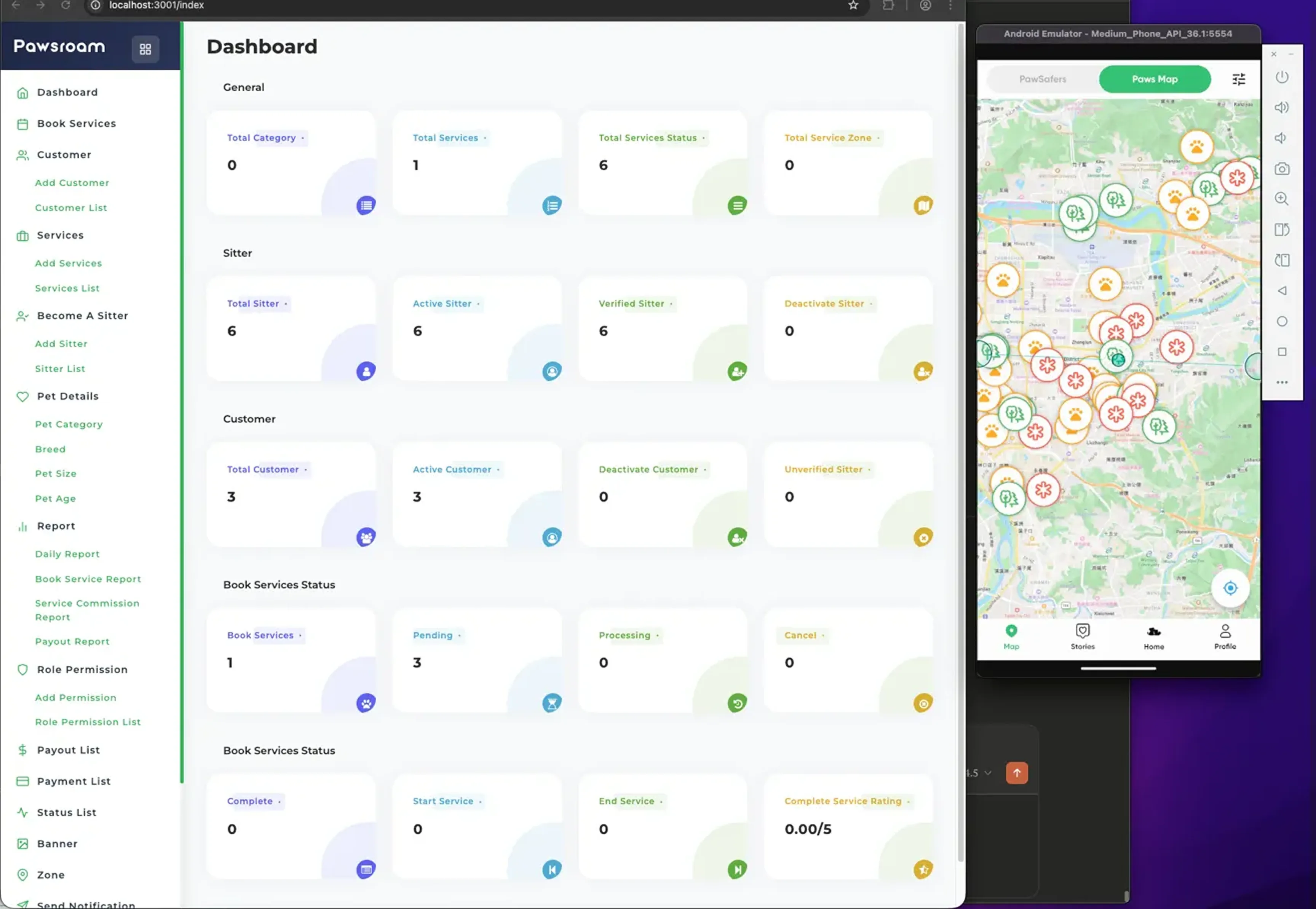
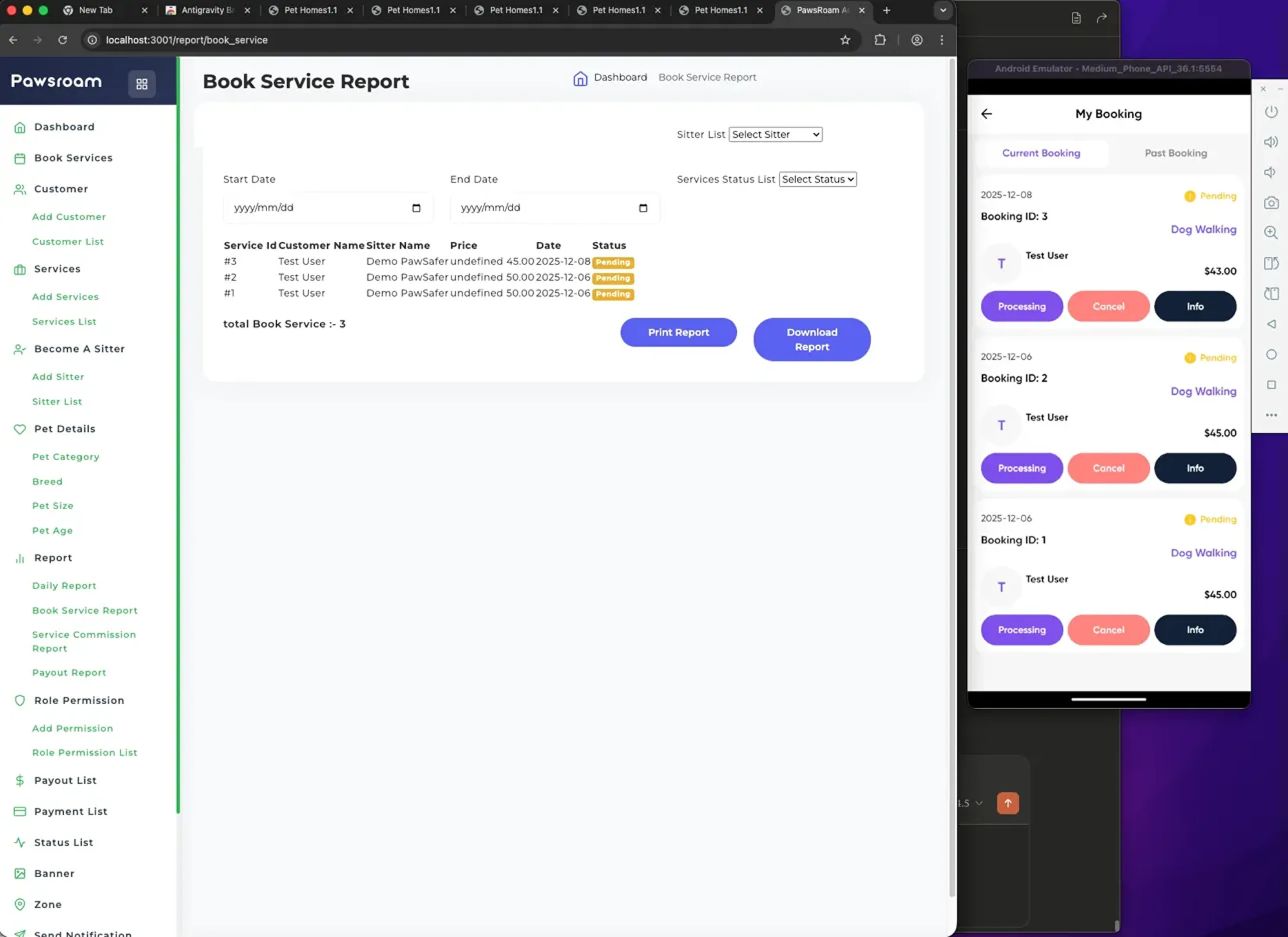
Admin Dashboard
8. Internationalization — Designed for Japan First
Most products add international support as an afterthought. PawsRoam was designed Japan-first from the first commit. The localization wasn't bolted on after the English version was done — it was baked into the architecture from day one. Japanese, English, and Traditional Chinese (繁體中文) are all supported in v1. Not because it was easy. Because it was right.
Market Priority: Fukuoka → Tokyo → Shizuoka
- Kenta's insight about Fukuoka's pet culture validation led to Fukuoka first
- 15.9 million dogs and cats in Japan (2024) — more pets than children under 15
- Japan's declining birth rate is driving pet humanization — pets are family, not accessories
- Ed learned Japanese specifically for this market — the language investment signals the commitment
- High density urban environments (Tokyo, Osaka, Fukuoka) create acute pet-travel friction — the problem is more visible here
Localization Architecture
- i18n framework built into React from initial architecture
- Language switcher in navigation — JP / EN / 繁体
- Date, currency, and address formats localized per region
- Content (spot listings, sitter profiles) tagged with language availability
- Firestore documents structured for multi-locale content delivery
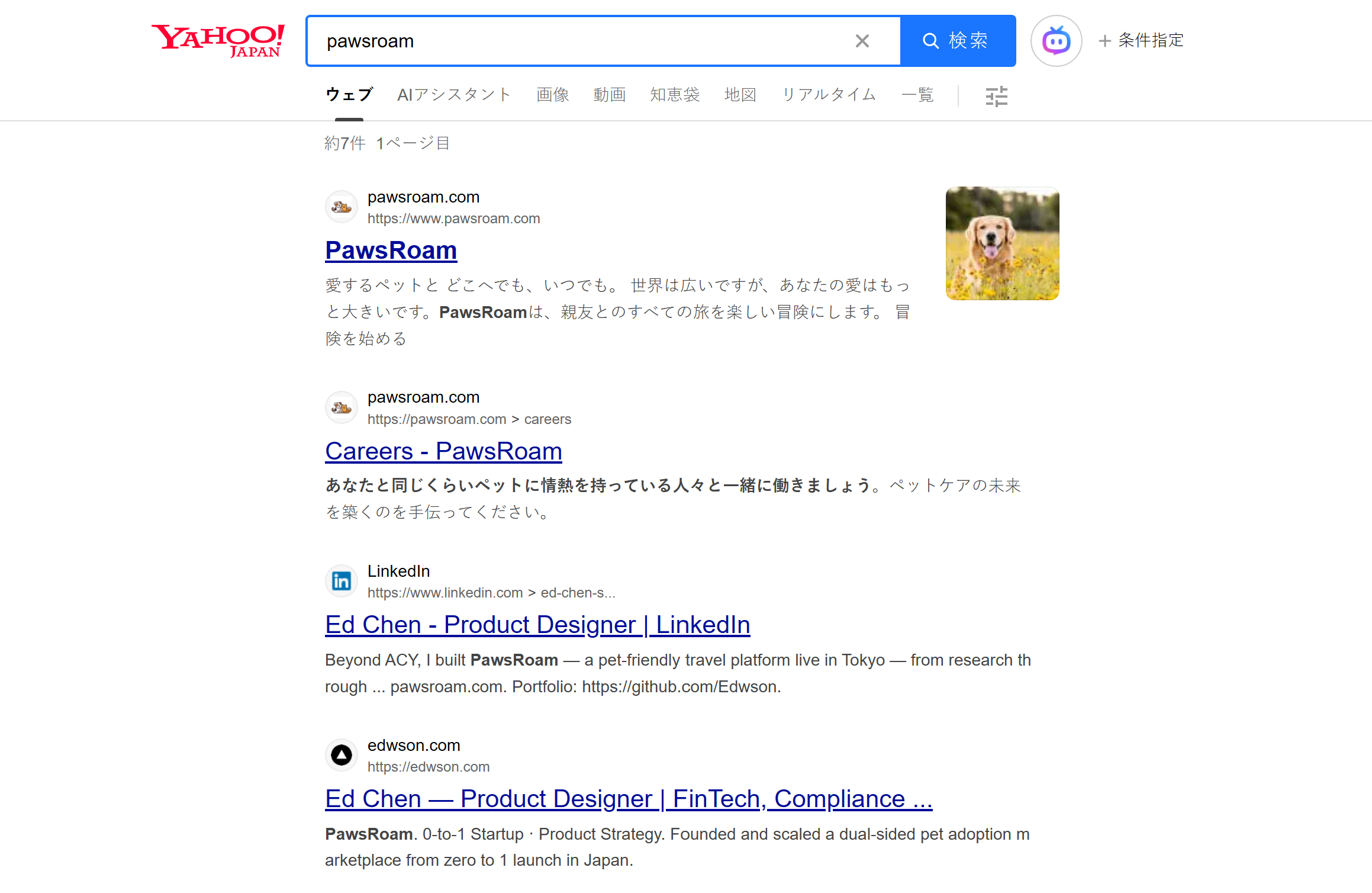
Japan market research — understanding digital distribution channels, local SEO, and how Japanese pet owners discover services online.
9. Regulatory Compliance — Enterprise-Grade Japanese Framework
11. What's Next — May 2026
10. What PawsRoam Proves — B2C Product Capability
For hiring managers and product teams evaluating B2C experience: PawsRoam isn't a portfolio piece assembled to check boxes. It's a real product with real users, real traction, and a real investor meeting on the calendar. Here's what it demonstrates:
Strategic Product Architecture
From 0 to MVP: High-tier market research in Tokyo → Strategic architecture → React 18 implementation → Firebase/k8s cloud infrastructure → verifiable live production environment. Demonstrates the technical discipline to architect and execute a multi-layered ecosystem, bridging design strategy with production-scale engineering without institutional friction.
Real User Research — Not Assumed Personas
Multiple research trips to Tokyo. Conversations with pet owners in Yoyogi Park, Shimokitazawa, Nakameguro. Interviews with sitters, veterinary clinic staff, pet cafe operators. Competitive analysis identified the platform gaps; field research identified the human friction underneath those gaps. The features exist because both inputs agreed: existing platforms had structural architecture problems, not just UI problems.
International Product Thinking — From V1
JP/EN/繁 from version 1. Japanese VC relationship built from Computex. Japan-first go-to-market. Learning a new language to access a new market. This is what it means to think internationally — not translating a product for a new market, but designing it for that market from the ground up. Built to cross borders, not just ship features.
11. What I'd Do Differently
PawsRoam is 3 months post-MVP. This reflection is based on what I've already learned, not speculative hindsight.
1. Validate provider supply before building demand
I built the user-facing product (demand side) before confirming the sitter/provider network (supply side) would be sufficient at launch. The emergency sitter matching feature — arguably PawsRoam's most differentiated capability — requires supply density to work. In a 2-sided marketplace, supply constraints directly limit the demand-side experience. I should have started with provider onboarding 2 months before building user-facing features.
This is the classic marketplace cold-start error. Uber solved it with driver incentives; Airbnb solved it with photography outreach. I didn't have a provider acquisition strategy ready at launch.
2. Firebase Auth metrics should have been the primary success indicator from day one
The 200MB hosting transfer in the first 7 days is a real metric, but it measures asset delivery (images, JavaScript bundles), not users. I should have instrumented user registration flow analytics and day-7 retention metrics from the first deploy. I didn't, which means I'm measuring the wrong thing for the first month — I know the app is being loaded, not whether people are returning.
Lesson: define the 3 product metrics that matter before writing production code. For PawsRoam V2, they are: registered users, day-7 retention rate, and sitter response time to emergency requests.
3. The VC relationship should have come with a formal introduction to the Fukuoka pet community
The Computex VC conversation validated the market thesis but I didn't leverage it for warm introductions to Fukuoka operators and potential early users. I approached the Fukuoka market cold. A formal introduction from a trusted local investor would have accelerated provider onboarding and established credibility with the pet business community I need as early adopters.
This is being corrected for the May 2026 Tokyo VC presentation — the explicit ask will include warm introductions to 10+ Fukuoka pet operators and 3 institutional pet-industry partners.
Live Demo
Two-Sided Marketplace Health Monitor
Live GMV, commission breakdown by product line, and supply-demand balance across PawsRoam's marketplace. These are the four questions I get asked in every investor conversation — so I built them as one live surface instead of juggling spreadsheets during calls.